
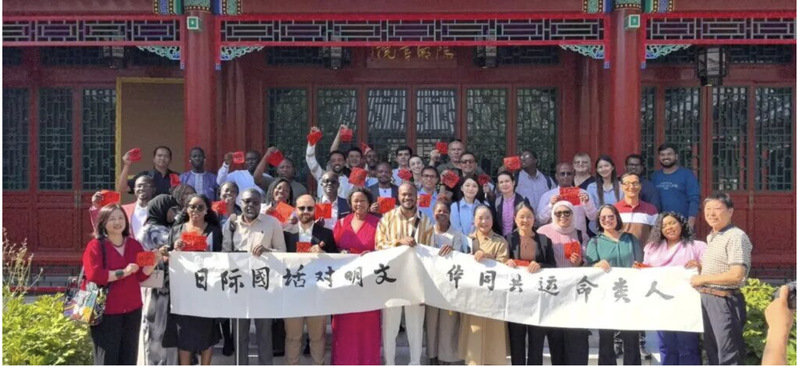
近日,巴基斯坦经济新闻网站“巴基斯坦经济网”(Pakistan Economic Net)刊发该网站执行主编莫伊兹·法鲁克(Moiz Farooq)采写的报道,聚焦中国传媒大学于6月5日举办的“全球文明倡议下的媒体使命:‘文明对话国际日’中传对话会暨中国国际新闻交流中心记者参访”全球记者沙龙活动。该报道介绍了来自40余个国家的50多位媒体记者围绕文明交流互鉴、媒体责任与国际传播合作等议题展开的深入交流,并关注记者团到访人类命运共同体研究院,了解研究院在人类命运共同体理念阐释、国际传播与文明交流互鉴等领域的研究与实践。现将全文转载如下。
Communication University of China Hosts International Dialogue on Media’s Role in Advancing Civilizational Exchange
Beijing (PEN): Communication University of China (CUC), in collaboration with the China International Press Communication Center (CIPCC), successfully hosted the international dialogue titled “The Mission of Media Under the Global Civilization Initiative: Communication University of China
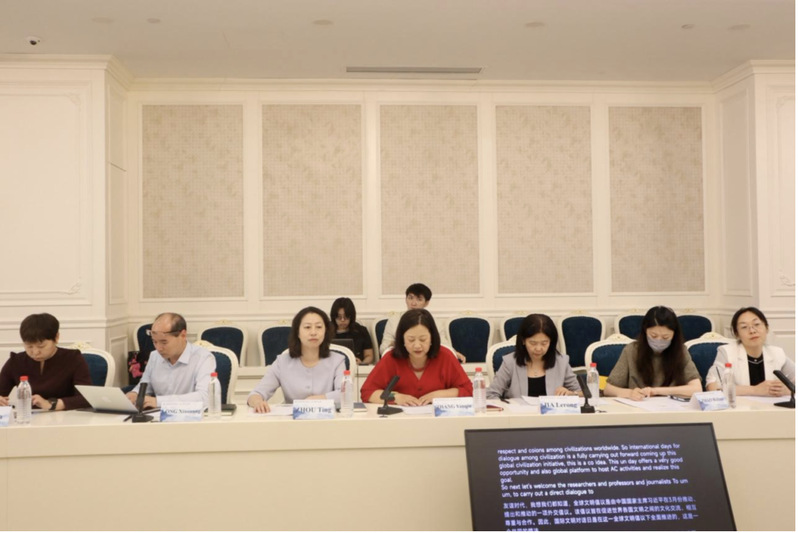
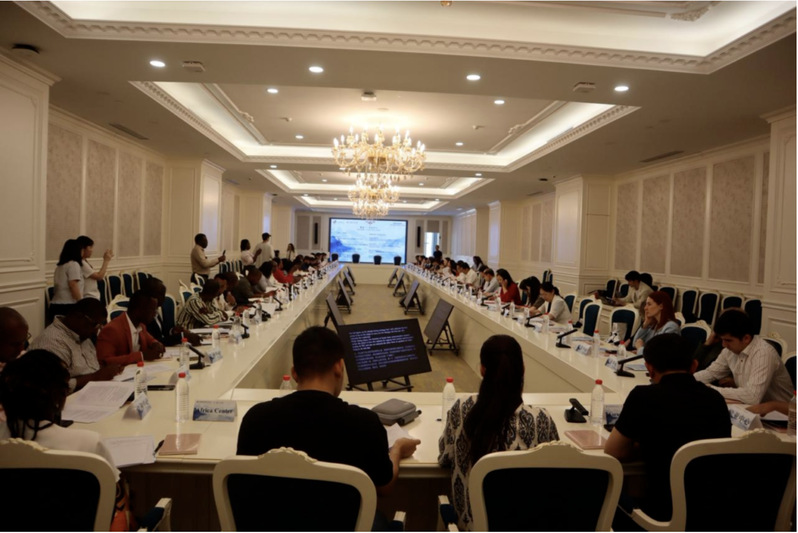
Dialogue on the International Day for Dialogue among Civilizations.” The event brought together journalists from more than 50 countries and regions across Asia Pacific, Africa, and Eurasia, alongside Chinese academics, media experts, and representatives from the Ministry of Foreign Affairs.
The dialogue was organized in anticipation of the United Nations
International Day for Dialogue among Civilizations and focused on the crucial role of media in fostering mutual understanding, promoting cultural exchange, and strengthening international cooperation. The event reflected the growing global recognition of dialogue among civilizations as an essential pathway toward peace, development, and shared prosperity.
Delivering the keynote address, Ren Mengshan, Vice President of Communication University of China, emphasized that dialogue among civilizations serves as a bridge of friendship, a driver of development, and a foundation for peace in an increasingly interconnected world. He noted that amid rapid technological advancements, geopolitical challenges, and evolving global communication landscapes, the media has a vital responsibility to promote understanding, combat prejudice, and facilitate constructive dialogue among nations and cultures.
Vice President Ren highlighted three key missions for contemporary media. First, journalists should serve as bridge builders among civilizations by presenting diverse cultures objectively and truthfully, fostering mutual respect and appreciation. Second, media professionals should act as conveners of global consensus by encouraging constructive discussions on common challenges such as climate change, artificial intelligence governance, and public health. Third, journalists must remain guardians of truth, upholding professional ethics, factual reporting, and public trust in an era characterized by information overload and rapidly evolving digital technologies.
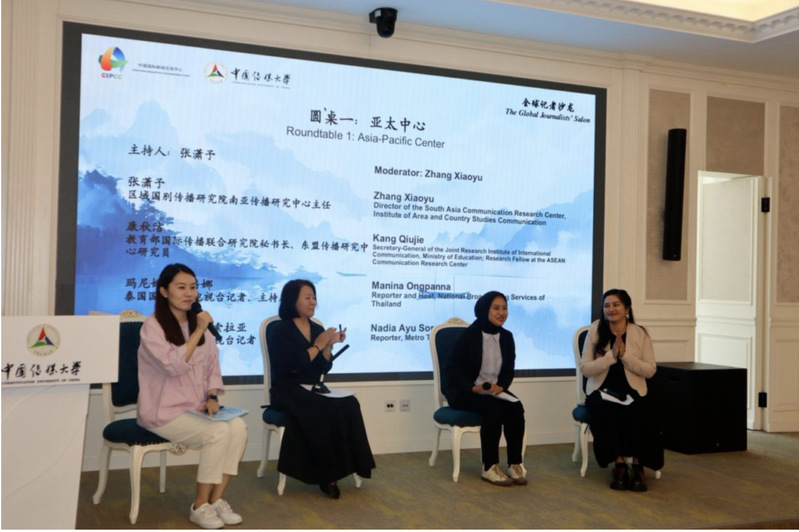
The panel discussions explored a range of critical topics, including dismantling stereotypes and civilizational prejudices through responsible journalism, enhancing international communication in the digital age, leveraging emerging technologies to strengthen intercultural dialogue, and empowering young media professionals to promote people to people exchanges. Experts and journalists from Thailand, Indonesia, Ethiopia, Zambia, Russia, Kazakhstan, and China participated in thematic roundtable discussions, sharing perspectives and best practices from their respective regions.
Among the international speakers, Ying Maneenat Onpanna, news anchor of Thailand’s National Broadcasting Service (NBT) and special correspondent for JeenThai News, highlighted the important role of journalists as bridges between cultures and civilizations. Speaking on the impact of emerging technologies, particularly artificial intelligence, she noted that while AI is transforming the way information is created, translated, and distributed, the essence of communication remains rooted in human responsibility and professional ethics. She emphasized that journalists must continue to uphold truth, combat misinformation, and foster mutual understanding among people of different cultures. Her remarks reinforced the importance of credible, human centered journalism in promoting peace, mutual respect, and sustainable development in an increasingly interconnected and technology driven world.
Nadia Ayu Soraya of Metro TV Indonesia underscored the growing interconnectedness of modern journalism, noting that domestic stories increasingly carry international significance in today’s globalized world. Drawing from her experience covering Indonesia’s parliament, she emphasized that effective international communication requires combining local depth with global resonance. She highlighted how issues such as sustainable development, economic partnerships, democratic governance, and social progress transcend national borders and contribute to wider global conversations. Nadia stressed that media organizations play a vital role in showcasing authentic national experiences, fostering mutual understanding among societies, and building bridges between nations through responsible storytelling. She called upon journalists worldwide to continue telling stories that connect people and civilizations rather than deepen divisions.
Getahun Assefa Tessema, Senior Journalist, Show Producer and Host at Ethiopian Broadcasting Service (EBS TV Worldwide), emphasized the responsibility of cross border media in promoting dialogue among civilizations and challenging long standing stereotypes. Reflecting on both his professional experience and academic research at Communication University of China, he noted that international communication should be based on listening, mutual respect, and collaborative storytelling rather than one way narratives. He stressed that media organizations have a unique role in building trust between societies by presenting balanced perspectives, amplifying local voices, and telling stories that connect people rather than divide them.
Speaking about the role of higher education institutions, Vice President Ren reaffirmed CUC’s commitment to fostering international cooperation in journalism and communication studies. He highlighted the university’s ongoing efforts to build global partnerships, promote cross cultural communication research, and cultivate a new generation of media professionals equipped with global vision, professional competence, and cultural sensitivity.
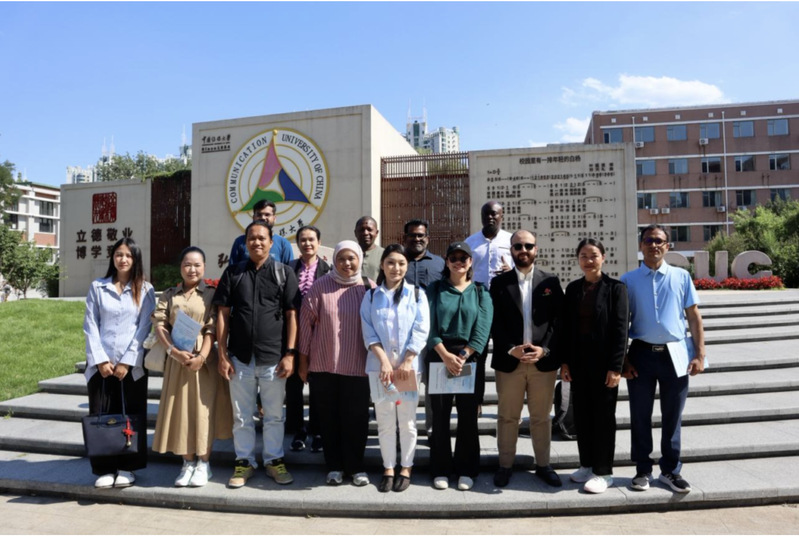
Vice President Ren expressed CUC’s readiness to further strengthen cooperation with media organizations worldwide through cross border interviews, joint reporting initiatives, talent development programs, and deeper academic exchanges. He emphasized that meaningful international communication is not merely about the flow of information but about the exchange of ideas, mutual listening, and shared understanding.
The event concluded with a campus tour of Communication University of China, including visits to the Institute for a Community with a Shared Future and the Communication Museum of China, providing international journalists with a deeper understanding of China’s communication education and research landscape.
The dialogue underscored the growing importance of media as a force for connecting civilizations, strengthening mutual understanding, and promoting peaceful coexistence in a rapidly changing world. Participants expressed their commitment to advancing responsible journalism and enhancing international cooperation to build a more inclusive and interconnected global community.
Report By : Moiz Farooq
Executive Editor, Pakistan Economic Network and Daily Ittehad Media Group